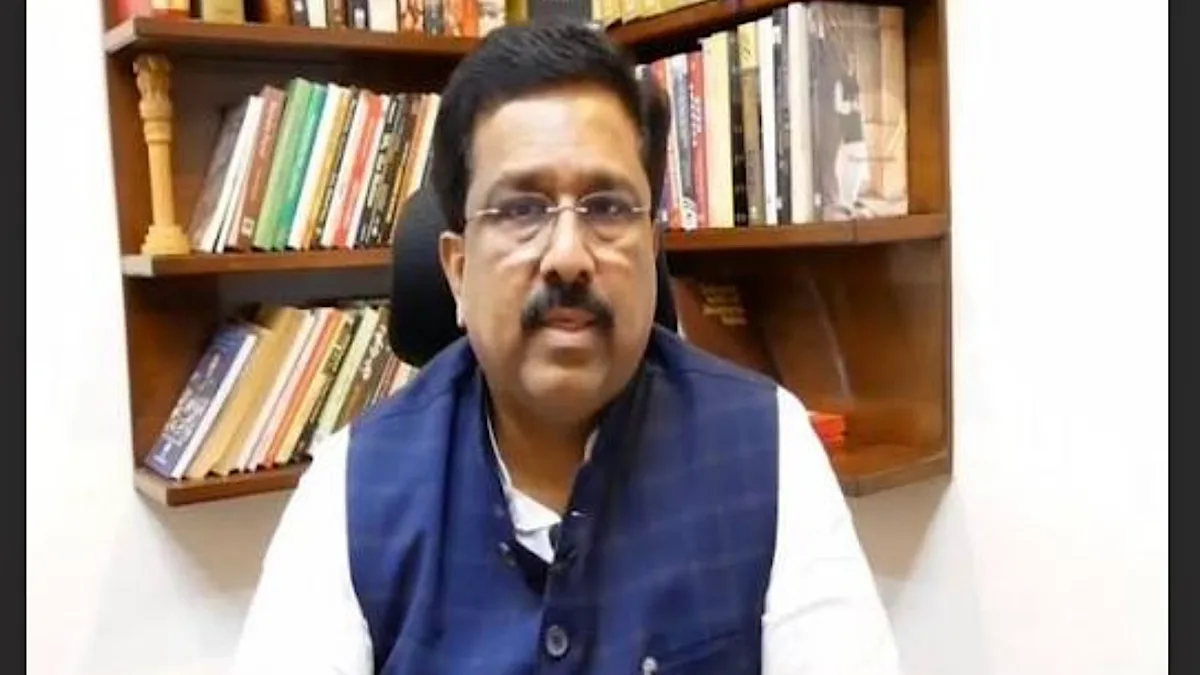
Congress leader Nasir Hussain on Sunday criticised the Centre’s circular, issued recently by the Ministry of Minority Affairs seeking additional payment from Haj pilgrims, terming it “arbitrary, unjustified and a reflection of administrative failure”. He called for its immediate withdrawal along with a full refund to those affected.
The controversy stems from an April 28, 2026 circular directing every Haj pilgrim to deposit an extra amount by May 15, despite the pilgrims having already paid the full cost in multiple instalments over several months. Hussain said the demand was made without prior notice or consultation, placing financial and emotional strain on thousands of pilgrims, many of whom are elderly and some already in Saudi Arabia to perform the pilgrimage.
Advertisement
“This last-minute demand has imposed avoidable hardship on pilgrims who had planned and saved for years to fulfil a deeply personal and religious obligation. They are being treated as a revenue source rather than citizens deserving dignity and protection,” Hussain said in a statement.
He also flagged the rising cost of the Haj pilgrimage, alleging that airfares charged through official channels are “nearly double” those available in the open market for similar routes. “The overall package cost has reached levels that put the pilgrimage out of reach for many ordinary families. This is not discretionary spending—it is a once-in-a-lifetime spiritual commitment for which families save over many years,” he said.
While the government has cited rising fuel prices as the reason for the additional charge, Hussain questioned the logic behind the move. “If fuel price pressures have not been passed on broadly to the public, why are Haj pilgrims being singled out at the last moment after full payment?” he asked, suggesting that the issue points to deeper structural shortcomings rather than external economic factors.
According to Hussain, private tour operators—despite lacking the government’s diplomatic leverage—are able to offer comparable packages at competitive rates, raising concerns about inefficiencies in the official system. He argued that the surcharge reflects systemic gaps such as the absence of competitive tendering, lack of price-stabilisation mechanisms, and inadequate contingency planning.
Drawing a comparison with previous administrations, Hussain said earlier frameworks ensured better regulation of private operators and greater accountability in pricing. “Regulation and transparency are not acts of generosity but basic requirements of governance,” he said, adding that the current situation reflects a decline in institutional oversight.
Calling the circular “a symptom of policy failure rather than a solution,” Hussain demanded its immediate withdrawal, a full refund of the additional charges collected, and the introduction of structural reforms, including mandatory competitive tendering and a Haj Price Stability Framework ahead of the 2027 pilgrimage season. “The government must act in the interest of its citizens and use its institutional capacity to negotiate fair outcomes, rather than shifting the burden onto pilgrims at the last moment,” he added.